
- Commercial Greenhouse
- Film Greenhouse
- PC Greenhouse
- Glass Greenhouse
- Tunnel Greenhouse
- Scientific Research Greenhouse
- Vegetable Greenhouse
- Flower Greenhouse
- Multi-span Greenhouse
- Sawtooth Greenhouse
- Greenhouse Equipments
- Greenhouse Accessories
- Hot Dip Galvanized Pipe
- Irrigation System
- Hydroponics System
- Planting Tools
- Planting technology
Tel: +86 191 5068 3942
Fax:
Mobile: +86 191 5068 3942
Contact: Alina
E-mail: sales@cngreenhouses.com
SKYPE:


- Features


| Type | Film greenhouse, small walk-in shed |
| Frame | Hot dip galvanized steel pipe |
| Cover | Polyethylene film, standard clear greenhouse film, 6 mil (about 0.15 mm) |
| Film thickness options | 0.12 mm or 0.15 mm |
| Cover fixing | Aluminum clips |
| Layer | Single or double |
| Roof | Arch shaped |
| Operation | Manual or electric |
| Materials | Plastic and mesh |
| Set-up | Foldable, no tools, about ten minutes |
| Main uses | Vegetable, fruit, flower and seed nursery |
| Export markets | Global |
Why a Walk-In Shed and Not a Lid
A low box with a hinged lid protects the plants, but it stops protecting them the moment they need height. A walk-in shed keeps a working space as well as a sheltered one: the film goes up above head height, so a tomato or a pepper plant is not bending into a lid, a tray of seedlings can be moved in and out without dismantling anything, and a watering can, a trowel and a bag of compost can live on the floor beside the bed instead of in the house.
The second reason is the weather. The covering locks in warmth, blocks harsh wind and rain and keeps pests away, which is the whole point of putting a roof over a garden bed in the first place. Seedlings that would be cut down by a single bad night, herbs that would be flattened by a squall and young plants that are not ready to be rained on all keep growing inside it, and the gardener keeps working in it when the day outdoors is unpleasant.
Where It Fits at Home
The shed is aimed at backyards, small patios and other places where a full house will not go. Walk the site before choosing a spot: the ground should be firm and roughly level, because a frame that is standing on loose soil cannot hold its shape or its film tension; there should be sun for most of the day, since a clear film cover passes light but cannot make it; and the door should open towards the path that will actually be used in winter, not across a flower bed.
Wind matters more than most buyers expect on a light frame. A position with a fence, a hedge or a wall on the prevailing wind side takes a great deal of load off the cover, and on an exposed site the shelter is worth more than a few extra hours of sun. Water should be reachable with a can or a hose, and it helps to leave a metre of working space in front of the door so the cover can be folded back without stepping into the bed. The unit is described as suitable across climate conditions and adaptable to the landscape it is put in, which in practice means the same shed is used on a paved patio, on a gravel hard standing and at the end of a raised bed.
The Frame and the Cover
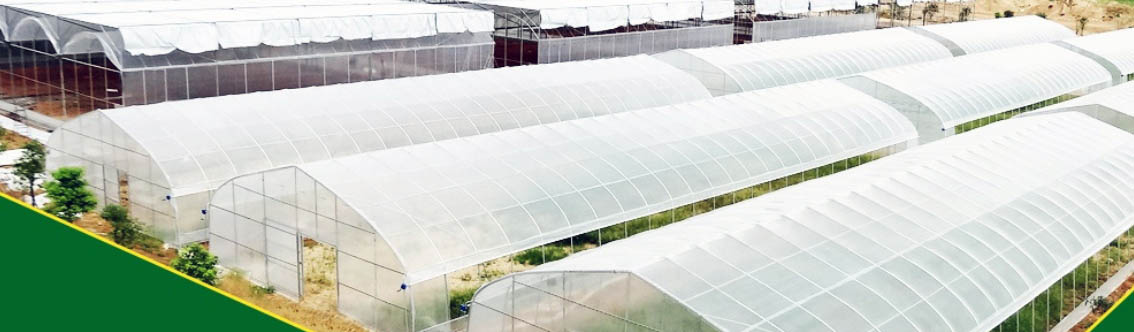
The structure is built from hot dip galvanized steel pipe. That choice is what makes the shed a piece of equipment rather than a season-long experiment: the frame is dipped rather than painted, so the coating is on the inside of the tube as well as the outside, and rusting is held back at the joints, the drilled holes and the ends of the pipe where a painted frame fails first. The roof is arch shaped, which sheds rain and lets the film be drawn tight over a curve instead of being stretched across corners.
The covering is polyethylene film and nothing else, secured with aluminum clips. Film is specified in two thicknesses, 0.12 mm or 0.15 mm, and the standard clear greenhouse film used on this shed is 6 mil, which is about 0.15 mm; the layer can be single or double, and opening is available with manual or electric operation. Aluminum clips are the fixing to look at when the shed is inspected: they grip the film where it is doubled over the pipe, they can be re-seated by hand if one is dislodged by wind, and they do not cut the sheet the way a sharp edge will.

Putting It Up, Moving It and Packing It Away
The shed is built around a foldable design and needs no tools to raise: the frame opens, the film goes over it and the clips go on, which is a job of about ten minutes on a day without much breeze. A still morning is the right time to do it. Film is a sail while it is loose, so the cover should be laid over the frame and clipped from the middle outwards rather than fought into position from one end.
Working on the ground first and then lifting the frame is easier with two people than one. Once the film is on, walk the clips around the frame twice: the first pass seats them, the second finds the ones that need a little more tension, and evenly tensioned film is the difference between a cover that stays quiet in wind and one that slaps against the pipe all night.
The same folding idea is what makes it portable. The shed can be taken down, carried across a garden and put up over a different bed when a crop is finished, moved out of the way when a hard frost is expected to be followed by a mild spell, or packed flat and stored when it is not needed. Storing it dry and out of direct sun is worth doing, because film that is folded away wet will mark, and a frame stored on soil will pick up damp at the points where the coating has been scratched.
Warmth and Air Inside
A closed film shed works by holding on to what the day has already given it. It effectively inhibits heat loss and cold air infiltration and has good insulation properties, so the air inside stays noticeably milder than the air outside after sunset, which is exactly the window in which a seedling is lost. On a sunny day the same cover will overheat the space if it is left shut, so the shed is not something to close in spring and forget.
The vents on the model are made from plastic and mesh and are operated manually or electrically, and running costs are low, since a manual opening costs nothing to use and an electric opener draws very little. The habit to build is opening in the morning and closing in the middle of the afternoon: open early enough to let the humid night air out before the sun starts working on a sealed volume, and close early enough that the stored heat is still in the house when the temperature drops. A small shed heats and cools faster than a large one, so it reacts to the weather within minutes rather than hours.
Systems You Can Add Later
The shed is supplied as a frame and cover, and the systems below are ordered according to what the buyer wants to grow and how much of the year the shed will be used. None of them is needed to make the shed work, which is why they are kept separate.
- Cooling and heating, for growers who want to keep using the shed past the point where a cover alone is enough.
- Irrigation, so watering stops being a daily trip with a can.
- Ventilation, where the manual or electric openings on their own do not move air fast enough.
- Fertilization, added to the irrigation line for feeding through the season.
- Shading, for a shed that stands in full sun through the hottest weeks.
- Benches, to lift trays to a working height and free the floor, including a seeding bed for the propagation stage.

What Grows Well Under It
Vegetables, fruit, flowers and seed nursery are the four uses the shed is listed for, and they behave differently under the same cover. Seed nursery is what a small walk-in suits best: sowing in trays, keeping the trays warm and damp through germination, and moving the seedlings on once they are strong enough, with plastic seeding trays sized to sit on a bench or the floor of the shed.
Vegetables and herbs are the second use, whether that means an early start for salad leaves or a late crop of herbs carried into the autumn. Fruit in a shed this size usually means a few plants in pots or a cordon against one wall rather than an orchard, and flowers split into two jobs: bringing on bedding plants for the garden, and holding cut flowers in the cool weeks so the stems are not spoilt by rain.
The shed does not change what a small plot is capable of, it moves the dates. Protection is what buys the extra few weeks at each end of the season, and the grower who opens and closes the vents on time collects all of them.
Growing under cover is a documented practice rather than a local habit. The technical guidance on protected cultivation and the seasons it can carry is published by the FAO, and how commercial growers run their houses week by week, including the support systems a shed like this can be ordered with, is reported by Greenhouse Grower.

If You Need a Bigger Film House Instead
The same factory also builds commercial film houses, and the figures for that side of the range describe them rather than this shed: spans of 6.4 m, 8 m, 9.6 m and 10 m, total structural heights from 4.3 m to 6.5 m, standard bays of 64 m by 40 m, or 2,560 square metres, a middle scale classification and a wind load of 0.35 kN per square metre. A grower who starts with the walk-in and then needs a working house is buying those numbers, not a larger version of the foldable shed.
The step up is worth taking only when the crop outgrows the shed rather than when the shed feels small. Compare the plastic film greenhouses in the range to see what a permanent house adds and what it asks for in ground preparation, and look at a single-span film house if the site is a garden strip where a multi-span house will not fit. For growers whose scale is a market garden rather than a patio or a farm, a garden vegetable greenhouse is the nearer comparison, because it is sized for working by hand rather than by machine.
How Long the Galvanized Frame Lasts
How long the pipe frame lasts before it needs attention is set by the air around the site, not by the year it was bought. Under ISO 9223 a standard galvanized coating is expected to reach first maintenance at roughly:
- about 13 years in heavy industrial air (class C4);
- about 30 years in urban conditions (class C3);
- about 50 years in coastal conditions (class C5);
- 50 years or more without repair in clean suburban conditions (class C2).
The galvanized pipe used on this shed carries a specified average coating of 70 to 85 micrometres of zinc under BS EN ISO 1461, assessed against BS EN ISO 14713-1, and the factory has been building greenhouse frames for above 35 years. On a small shed the practical points are the scratched joints made during a move, which should be touched up, and the ground contact at the base of each leg, where a dry hard standing lasts longer than damp soil.
How the Shed Is Packed and Shipped
An order leaves the factory in three groups: the metal structure, the covering system and the installation accessories. Keeping the film separate from the frame matters, because a cover that rubs against bare pipe in a crate arrives with scuffed sheets, and the clips travel with the parts they fit rather than in a mixed bag.
The company ships to buyers worldwide, with a packing and transport team that loads the structure, the film and the accessory boxes together so a shed that crosses a border is not missing the small parts when it is unpacked. Orders for this range have been shipped to customers in many countries; if a buyer needs the shipment grouped differently, or the frames and covers split between two addresses, that can be arranged when the order is placed.

The Factory Behind the Shed
The shed is made by a manufacturer rather than resold by a trading company, with its own frame factory, its own engineer department and its own packing and transport team. That matters for two reasons: the pipe, the film and the clips are under one quality control through production, and a question about a shed already delivered has someone to go back to.
If a buyer wants support during assembly, engineers can be sent abroad to guide the installation, and the team stays reachable by phone and email for advice on siting, ventilation or an added system. Customers also visit the factory for cooperation discussions, so a visit can be arranged as part of an order. To ask about a walk-in shed or to compare it with the larger houses, call +86 191 5068 3942 or write to sales@cngreenhouses.com.

Frequently Asked Questions
Q: How long does the small walk-in take to put up?
About ten minutes, without tools. The frame opens out and the cover is drawn over it and held with aluminum clips. Do it on a still morning if possible, because loose film catches wind, and work the clips from the middle of the frame outwards so the sheet is not pulled to one side while it is being fixed.
Q: What film does the cover use, and how is it held on?
Polyethylene film, supplied as standard clear greenhouse film at 6 mil, which is about 0.15 mm, with 0.12 mm available as the thinner option. The film is listed as the only covering material for this model, it is held with aluminum clips over an arch shaped roof, and the cover can be single or double layer. Clips can be re-seated by hand after a windy night, which is one reason the fixing is worth checking when the shed is inspected.
Q: Can it be left outside through the winter?
The frame is hot dip galvanized steel pipe and the cover is film, so the shed can stay in place through ordinary winter weather on a garden site. Two things decide how well it does there: shelter, because a hedge or fence on the windward side removes a great deal of load from the cover, and site drainage, because a frame standing in water will outlive its coating quickly. Film is the part of any covered house that ages first, so expect the cover to be the item replaced, and store the shed dry and out of direct sun if it comes in for the summer.
Q: Does the galvanized frame rust outdoors?
The coating is designed to be used outdoors and gives many years of service, and how many depends on the corrosivity of the air: under ISO 9223 roughly 13 years to first maintenance in heavy industrial air (class C4), about 30 years in urban conditions (class C3), about 50 years in coastal air (class C5), and 50 years or more without repair in clean suburban conditions (class C2). The pipe carries a specified average coating of 70 to 85 micrometres of zinc to BS EN ISO 1461, assessed against BS EN ISO 14713-1. Scratches picked up while the shed is moved should be touched up, since a broken coating at a joint is where rust starts.
Q: Can irrigation, heating or shading be added to a shed this small?
Yes. Cooling and heating, irrigation, ventilation, fertilization, shading and benches are all listed as systems that can be added depending on what the buyer wants to grow. The shed is sold as a frame and cover and works on its own without any of them, so the practical approach is to use it for a season first and order what the growing actually needs. Benches are usually the first addition, because lifting trays to working height makes a small shed much easier to use.
Q: Are you the manufacturer, and can you help with assembly?
We are a manufacturer with our own frame factory, engineer department, and packing and transport team, and the whole range, from walk-in sheds to commercial film houses, is produced in-house. Layout drawings and installation manuals come with the order, the assigned engineer stays available for questions during assembly, and engineers can travel to a buyer's country to guide the installation if that is wanted. For pricing or a comparison between shed sizes, call +86 191 5068 3942.
 Deutsch
 Español
 Français
 Italiano
 Português
 日本の
 한국어
 العربية
 български
 hrvatski
 česky
 Dansk
 Nederlands
 suomi
 Ελληνικά
 हिन्दी
 norsk
 Polski
 Română
 русский
 Svenska